Showing posts with label Andy Tattersall. Show all posts

Wednesday, 22 August 2018

Libraries and free technology – Bargains to be found if you look around and avoid the pitfalls

Image of Andy Tattersall
Andy Tattersall
This post was originally written by Andy Tattersall ahead of his and fellow MmIT committee member Christina Harbour’s participation in the next #uklibchat

There is the line that you can never have too much of good thing and these days there are so many good things that librarians and information professionals can employ in their working environment. The great thing is that since we emerged from the world of Web 1.0 to 2.0 that a lot of these newer tools are free and actually quite useful. The flipside is that a lot aren’t that good or just can’t be applied in a library setting, regardless of how hard you try and knock a square peg into a round hole, it won’t go (unless the square peg is smaller of course).

Libraries are no different from any kind of organisation, they have to use formally licensed software for the day to day running of their service. Even though this does not always mean the leanest or most dynamic of packages serving your library, but it does mean you will get a good level of service support and that is essential. The smaller, more niche tools have a part to play in this technology ecosystem - just like the microbes and bugs on Planet Earth - if we remove them the whole system would collapse. The larger technology companies often need the smaller companies to keep the environment from becoming stale and predictable. They also can eat them up from time to time, just like our bugs and other real world creatures. Take for example how - at the time independent company - Mendeley changed reference management dramatically for the better. The smaller technology companies are less likely to get bogged down by bloated platforms run by large companies who focus first on foremost in delivering a stable product for their users. Like I say, the stability of large platforms is essential, the flexibility and dynamic nature of smaller technologies is often where the real action is at.
Image of uklibchat logo
uklibchat
The last ten years has seen a tremendous growth in new technologies that can be applied in a library setting. The financial cost of these tools, such as Canva, Twitter, Adobe Spark and Eventbrite can be free. Yet with freedom can come a cost as problems can start to float to the surface, although not all of these problems are that worrisome. The old adage ‘If you are not paying for the product - you are the product’ certainly rings true with how some technologies will give you a free ride if you give them your data in return. There are also issues around what do you do when you become hooked into a useful platform, but want more from the premium add ons and the person holding the purse strings says no. How do you know whether the tool you are using will be here tomorrow - remember PageFlakes, Storify, Readability, Google Reader and Silk anyone?

Another question for the typical library or information professional is which tools are best and how can they be applied and which will work on their system - take for example a librarian in an NHS setting. The final and most crucial issue is around the investment of time used to master new tools and that can be problematic depending on the learning curve, but if you know how to use Microsoft Word you’ll probably master most lightweight tools in very little time. The sheer number of tools that can be used in the library sector is overwhelming, regardless of whether you are a public, NHS, business or academic librarian. One tool may solve a host of problems for one librarian but be as useful as a chocolate teapot for another. It is all about application and one of the greatest things to see in technology uptake in the library is how one person can use a tool and then another take that same tool and apply it in a totally unexpected way just as successfully. This is the wonderful thing about these technologies, whether it is Menitmeter for polling, Pocket for curating or Piktochart for posters, you you use it may be totally different from how someone else does.




Monday, 30 July 2018

In the era of Brexit and fake news, scientists need to embrace social media

Image of Andy Tattersall
Andy Tattersall
Social media can be an intimidating place for academics as not all of them take to it like ducks to water. For many newcomers, a more appropriate analogy is a newborn giraffe - clumsy, awkward and vulnerable to prey.

After all, researchers are employed to win bids, publish research and get cited. Since most of this happens behind closed doors or within circles exclusive to the academic community, the open forum of social media can seem like a distraction from the real work.
However, for those willing to make the leap, research suggests that once academics surpass 1,000 followers on Twitter there is an appreciable increase in the diversity of the audiences they reach with their work.

Communicating with people outside of academia means reaching those who might directly benefit from the research. These individuals and groups can then help shape future research aims and give useful feedback to scientists. Still, many academics remain reluctant. There is no clear evidence that social media generates research impact that is beneficial to society, culture and the economy or at least it is very hard to measure.
Some academics have even lost tenure as a result of their behaviour on Twitter, while others have tried to disguise their limited expertise by building a reputation for authority online. With mounting pressure on the time of academics, social media can seem like it isn’t worth the effort.

Despite this, research shows that there is growing curiosity among scholars to use social media in their work, but to sustain this interest there needs to be clearer evidence of the benefits. In the age of Brexit and fake news, social media is more important to academia than ever before.
File 20180717 44100 otiedr.jpg?ixlib=rb 1.1
Scientists: your social media platforms need you! www.shutterstock.com

A virtual bridge with the EU after Brexit

Brexit has sown uncertainty in British universities among staff who are from the EU. In other sectors, such as the NHS, anxiety over the result has caused a fall in the number of trained nurses coming from the EU to work in the UK. British academics projected across social media could provide reassurance and support to international colleagues who have increasingly felt they are facing an uncertain future in the UK. Without more academics joining Twitter and other platforms, social media will continue to carry the voices of those who shout loudest. As a result, some of the biggest mouths deliver unwelcome messages to European colleagues who have built careers, homes and families in the UK.

No one truly knows what will happen in March 2019 when the UK formally leaves the EU, or if that will even happen. Social media presents a way of staying in touch with academics from across the Channel in any case, and allows people to stay abreast of new research, ideas and opportunities with European counterparts.

Academics will continue to communicate and collaborate on research after March 2019, but potentially not in the way that they have in the past. We do not know how Brexit will affect travel between the UK and the EU, but blogging and social media could promote openness in research that will bridge the divide left by tightening freedom of movement.

The fight against fake news

As crude a term as it is, fake news is a threat to the principles of rigorous investigation that academia embodies. In the United States, the suppression of experts and their data by the Trump administration highlights the risks of scientists remaining silent and not using social media channels to challenge misinformation.

In this “post-truth” world, we have often heard that people no longer wish to hear from experts. This shift was captured, again, by the Trump administration and their failure to appoint a scientific adviser to the White House.

Image of Protesters challenge the suppression of climate change research by President Trump. www.shutterstock.com
Protesters challenge the suppression of climate change research by President Trump. www.shutterstock.com


Of course, experts do get things wrong on occasions, but most people surely would rather a qualified pilot flew their plane than an amateur with opinions on aviation. Academics communicating their findings and ideas on social media platforms can attempt to address the balance that has shifted towards ill-evidenced news on these sites.
Improving working relationships with journalists can also ensure that stories shared online have links to open access versions of the research, so that science news is more easily checked for accuracy and properly credited to the original scientists.
The ConversationThe current moment and media climate may appear unfriendly to academia, but that is all the more reason for researchers to seize the initiative and reset the debate on their terms.

Andy Tattersall, Information Specialist, University of Sheffield
This article was originally published on The Conversation. Read the original article.

Monday, 4 June 2018

Andy Tattersall and Mark Clowes write for the latest issue of MmIT Journal

Image of Andy Tattersall
Andy Tattersall
Image of Mark Clowes
Mark Clowes
Andy Tattersall and Mark Clowes have written articles for the latest edition of the MmIT Journal. Andy Tattersall has penned a piece on using the superb software Adobe Spark to create short animated videos; whilst he has co-authored a piece with Mark on their work in setting up a pop up radio station to support the Sheffield Based charity Inspiration for Life and their yearly 24 Hour Inspire event. 


Both articles can be read in the latest issue online. MmIT is the open access journal for the Cilip special interest group Multimedia Information Technology. You can find out more about MmIT here. 

Thursday, 17 May 2018

Andy Tattersall to deliver Keynote at the Business Librarians Association Conference

Information Specialist Andy Tattersall is one of the three keynotes at this year's BLA Conference taking place at Swansea University. The three day conference takes place from 27th-29th June with the theme 'Making Waves'. Andy will be delivering his keynote on the 28th with a talk titled; "Staying afloat in a sea of technological change". 

The other two keynote speakers are 
Michael Draper, Associate Professor in Law, Swansea University and Professor Sally Bradley, Academic Lead in Accreditation, Award and Recognition, HEA and Professor, Sheffield Hallam University.
The conference web page and booking details can be viewed here

Thursday, 19 April 2018

Andy Tattersall's talk on Altmetrics at The British Psychological Society Research Day

Andy Tattersall was invited to give a talk about Altmetrics at The British Psychological Society Research Day held at the impressive Senate House Library in March. The recording of the talk and his participation in the final panel discussion can be viewed below. the slides are also at the end of this blog post.

Tuesday, 10 April 2018

Many a true word is spoken in jest, part two: more social media content that mocks, self-ridicules, and brings a smile to academia

Image of Andy Tattersall
Andy Tattersall
Two years ago, Andy Tattersall highlighted those Twitter accounts that offered some light relief from the often all-too-serious world of academia. This 2018 instalment includes an account “sadly” overlooked last time, as well as moving beyond the Twittersphere to share some the best memes, videos, and more to provide sharp commentary on peer review, academic advisors, and altmetrics.

In April 2016 I wrote about the growing number of parody Twitter accounts that take the best and worst of academia and serve it up as a comedy dish. As the title suggests, many a true word is spoken in jest but we all know that just below the surface lie the real home truths of our industry. The problem, however, for many academics trying to be “witty”, is that they can fall flat on their face. I thought it would be good to visit some of the other tongue-in-cheek academic excursions that capture the weird and wonderful within academia.

When I wrote the first post it was solely focused on the Twitter community, and sadly neglected to include one of the scholarly Twitterati’s most vocal protagonists - @ScientistTrump. When my post went live I was flattered to receive a tweet from Donald Trump, PhD calling my piece “biased” as it had not included him - he even concluded his tweet with one of the real Donald Trump’s trademark sign-offs: “SAD”. Thankfully the Trump obsession with fake news was not yet in full flow, but I am sure the post and the LSE Impact Blog would have been labelled as such. Whoever is behind this great account - and it is the greatest scientific Twitter account - has expanded to a full website and a forthcoming web store. Not wanting to inflate that already fully blown narcissistic ego any more, but the tweets are that of a very stable genius and reflect the kind of communication that is typical of President Trump but with a scientific slant applied. For example, in December Donald Trump, PhD proudly reported:

https://twitter.com/ScientistTrump/status/943093184384655361
His supporters will no doubt still be keen to see that wall built to ensure academic literature stays out of the public domain.

Given the daily communications coming out of the White House, it is not hard to satirise the 45th President of the United States. Putting an academic spin on The Donald is not so easy but Psychologist Matt Crawford made a good go of it with a fictional paper he published. The paper titled “A title for a really great piece of research, just the best, really” is full of classic Trump boasts, so much so that you will hear Donald’s voice inside your head as you read it.

https://twitter.com/MCrawford221/status/715835369170796544

Donald Trump’s tweets might make you feel outraged, but imagine how your social media stream would have looked with Hitler kicking and screaming across the web? Putting an academic slant on it, how would he have dealt with scientific peer review? Thankfully someone took that much-parodied scene in Hitler’s bunker from the film Downfall and re-subtitled it to show how Hitler would have responded to negative comments from the third reviewer. After a raging tirade, the Führer concedes that maybe he should just submit to one of those new “open access” journals.

Captioned images shared across the web, better known as memes, also offer much light-hearted humour that only those within academia will truly get. Some of the sharpest include the popular memes Boromir (Lord of the rings) and Willy Wonka alongside the tweets from Research Wahlberg and the Hey Girl. I like the library too blog.

https://twitter.com/ResearchMark/status/743502152367210496

A personal favourite comes from that most cosmic of sages, Yoda:

https://twitter.com/AcademicsSay/status/792860220020121601

Some of the finest moments can be found by searching “academic meme”s on Google Image Search or Pinterest.

Every institution has professors who are dapper in their fashion choices and those who look like they have crawled out of a hedge before heading into work. Prof or Hobo tests your ability to spot the professors from the tramps. I was made aware of the quiz by a professor in reference to one of his peers who proudly wears his dishevelled look as a badge of honour, actively trying his best to look like he lost a fight with a bear. The site features ten images and for each you simply have to choose whether the man in question is a professor or a hobo. Just remember that looks can be deceiving.

Whilst we are on the topic of chairs, there are also the kind you sit on to conduct your research. In case you wondered what happened to them after they were retired from duty, they appear on the Sad Chairs of Academia blog. Before they are dispatched to that great office in the sky, they are captured for one last time for this most surreal of blogs. I’m waiting for the best images to be compiled into a 2019 calendar.

Metrics and social media are never are far away from academic discussion, and both are valuable tools in communicating and gauging interest in a piece of research. The two are combined perfectly to calculate the satirical Kardashian Index where a scientist’s citations are compared to followers on Twitter. Of course citations and Twitter followers are no true measure as to a researcher’s true worth, but those with a high Kardashian Index score could indicate popularity over productivity. We are eagerly awaiting the Kanye West Index.

For most publishing in the academic sphere, you will no doubt receive regular invites to write for predatory journals. Whilst this issue becomes increasingly problematic there are a few things you can do to tackle these charlatans whilst also having a bit of fun. One idea is to use the tool Re:Scam which is part of the New Zealand online safety website Netsafe. This tool bounces replies back to scam emailers and keeps them tied up with computer-generated emails. Whether this will work with those actually sending out the phishing messages will be hard to tell, but it’s certainly worth a try in case any are bots. If that fails you can do as I did (in my lunch break) after receiving several requests to publish in a dubious fisheries and agriculture journal. I sent them a PDF formatted manuscript with the word “fish” repeated 6000 times, with a few fishy references to Jacques Cousteau and Michael Fish thrown in too, in addition to a table of different fish. For some reason they did not accept. Nor did they ever contact me again. Funny that.

The article originally appeared on the LSE Impact of Social Sciences Blog

Wednesday, 21 March 2018

What Can Altmetric.com Tell Us About Policy Citations of Research? An Analysis of Altmetric.com Data for Research Articles from the University of Sheffield

Image of Andy Tattersall
Andy Tattersall
Image of Chris Carroll
Chris Carroll              
Andy Tattersall (ScHARR Information Resources) and Dr Chris Carroll (ScHARR Health Economics and Decision Science) have published a new paper in Frontiers in Research Metrics and Analytics. The paper looked at published University of Sheffield research and what the data says about the impact of its research on national and international policy. The percentage of outputs with at least one policy mention compares favourably with previous studies, while huge variations were found between the time of publication and the time of the first policy citation. However, some problems with the quality of the data were identified, highlighting the need for careful scrutiny and corroboration.
 
Altmetrics offers all kinds of insights into how a piece of research has been communicated and cited. In 2014 Altmetric.com added policy document tracking to its sources of attention, offering another valuable insight into how research outputs are used post-publication. At the University of Sheffield we thought it would be useful to explore the Altmetric.com data for policy document citations to see what impact our work is having on national and international policy.

We analysed all published research from authors at the University of Sheffield indexed in the Altmetric.com database; a total of 96,550 research outputs, of which we were able to identify 1,463 pieces of published research cited between one and 13 times in policy. This represented 0.65% of our research outputs. Of these 1,463 artefacts, 21 were cited in five or more policy documents, with the vast majority – 1,185 documents – having been cited just once. Our sample compared very well with previous studies by Haunschild and Bornmann, who looked at papers indexed in Web of Science and found 0.5% were cited in policy, and Bornmann, Haunschild and Marx, who found 1.2% of climate change research publications with at least one policy mention. From our sample we found 92 research articles cited in three or more policy documents. Of those 92 we found medicine, dentistry, and health had the greatest policy impact, followed by social science and pure science.

We also wanted to explore whether research published by the University of Sheffield had a limited time span between publication and policy citation. We looked at the time lag and found it ranged from just three months to 31 years. This highlighted a long tail of publications influencing policy, something we would have struggled to identify prior to Altmetric.com without manual trawling. The earliest piece of research from our sample to be cited in policy was published in 1979 and took until 2010 before receiving its first policy citation. We manually checked the records as we found many pre-1979 publications to have been published much later, often this century. This is likely due to misreported data in the institutional dataset, giving a false date; highlighting the need to manually check such records for authenticity. The shortest time between research publication and policy citation was a mere three months: a paper published in November 2016 and first cited in National Institute for Health and Care Excellence (NICE) policy in January 2017.

The Altmetric.com reports are only as good as the data they analyse and our research did uncover some errors. Looking at those 21 papers with more than five policy document citations, we found seven were not fit for inclusion. One such example was identified when we discovered research papers had been attributed to the University of Sheffield when the authors were not, in fact, affiliated to the university. As this data is sourced from our research publications system, we assume this was a mistake made by the author; this can happen when authors incorrectly accept as their own papers suggested to them by the system. While this was almost certainly a genuine error, and may have been rectified later, the system had not yet updated to take account of such corrections. Another of these papers was mistakenly attributed to an author who had no direct involvement in the paper but who was part of a related wider research project. Another of the publications was excluded due to it not, in fact, having actually been cited in the relevant policy document. One of the papers that was included belonged to an author not at Sheffield at the time of publication, but who has since joined the institution. This showed that Altmetric.com’s regular updates were able to discover updated institutional information and realign authors with their current employer.

The two most cited papers came from our own department, the School of Health and Related Research (ScHARR), in the field of health economics. Only two of the 14 most cited publications were in a field other than health economics or pure economics, both of which were in environmental studies. In total, the 14 most cited research outputs were cited by 175 policy documents, but we identified 9% (16) of these as duplicates. Of those 175 citations we found that 61% (107) were national, i.e. from the UK, and 39% (68) were international, i.e. from countries other than the UK or from international bodies such as the United Nations or World Health Organization.

Altmetric.com continues to add further policy sources to its database to trawl for citations. As a result, it should follow that our sample of 1,463 research outputs will not only grow with more fresh policy citations, but as older research citations are identified through new policy sources of attention. This work also highlights the importance of research outputs having unique identifiers so they can be tracked through altmetric platforms; it is certain that more of our research will be cited in policy, but if no unique identifier is attached, especially to older outputs, it is unlikely the Altmetric.com system will pick it up.
Altmetric.com is a very useful indicator of interest in and influence of research within global policy. Yet there are clearly problems with the quality of the data and how it is attributed to subsequent Altmetric.com data. We found one third of our sample of the 21 most cited research outputs had been erroneously attributed to an institution or author. Whether this is representative of the whole dataset only further studies will find out. Therefore it is essential that any future explorations of research outputs and policy document citations be double-checked and not taken on face value.

This blog post is based on the authors’ article, “What Can Altmetric.com Tell Us About Policy Citations of Research? An Analysis of Altmetric.com Data for Research Articles from the University of Sheffield”, published in Frontiers in Research Metrics and Analytics (DOI: 10.3389/frma.2017.00009).

The blog post was originally written for the LSE Impact Blog and is licensed under a Creative Commons Attribution 3.0 Unported License unless otherwise stated. The original article appears here 
 
Creative Commons Licence

Monday, 27 November 2017

Andy Tattersall talk at Spot On 2017 at The Francis Crick Institute

Andy Tattersall gave a short lightning talk on the title: "Isn't it time we had a research equivalent of the learning technologist?" at this year's Spot On Conference at The Francis Crick Institute. The recording of the talk and the questions afterwards can be viewed below with the abstract.


Abstract:
Researchers increasingly need to understand a multitude of topics including digital copyright, impact, altmetrics, communications, social media, research data management and sharing, open access, infographics, video, animation and mobile apps. Yet all too often they have little time, support or encouragement to explore these topics and have they need to make informed judgements on the most appropriate technologies.
For decades skilled professionals have provided researchers with excellent services around collection management, content curation and discovery, critical appraisal and reference management among other services. More recently they have stepped into new areas of support and applied their knowledge around social media, metrics, scholarly communications and research data management. Yet despite this there has been no formal role to step into departments and faculties to address the shortfalls of support at the research coalface. The idea of the research technologist is a professional role who like a Swiss Army Knife is adapt at utilising new tools and technologies to support a modern, fit for purpose, research cycle. The purpose of the workshop would be to discuss this idea and whether the research community believes it is something they would benefit from and what areas they most need frontline support.


Friday, 3 November 2017

Andy Tattersall interviewed by the Librarians Aloud Podcast

I was really delighted to be interviewed by Laura Rooney Ferris for the popular Librarians Aloud Podcast alongside Jan Holmquist. In the podcast I talk about scholarly communications, digital academia, open access and data. You can listen to the podcast here 


Thursday, 19 October 2017

Andy Tattersall at Internet Librarian International

Image of Andy Tattersall
Andy Tattersall
As with the previous six years (it might be longer), I attended the popular and exciting conference Internet Librarian International. I've given numerous talks there over the last few years and had a year off last year to moderate a really superb session titled 'Come and feel the love'. This year I returned to the speakers lectern, not to deliver one, two, but three talks. I had pitched two in which were accepted and had an invite by the conference organisers to make it a trio. This put me in the brackets as such luminaries Phil Bradley and Marydee Ojala by giving multiple talks this year.

The first was at the end of day one where I talked about the video collections I have created as part of my role using tools like Adobe Spark and Videoscribe. I was alongside a really good presentation on content creation by The King's Fund by Hong-Anh Nguyen (a member of Sheffield's iSchool Alumni) and Deena Maggs. With three presentations, I felt like I was going into a sporting tournament where I was keen to get my first fixture under my belt. 

The next one followed after hearing David White from The University of Arts deliver a superb keynote. David is a very engaging speaker who I've had the pleasure of delivering a webinar alongside him for Jobs.ac.uk a couple of years ago. His talk was on the opportunities to be had for librarians in a world of misinformation and people looking for quick and agreeable answers. I then gave my talk on the future or research support and potential roles that could appear in the future to deliver them at the coal face of research. I was introduced by Phil Bradley which was a real pleasure and was fortunate to have quite a packed room for the session. At the the end there was some useful debate as to where we might be going with this.

Finally, to finish on a high note I presented in the same session as four wonderful Irish librarians who between them have created two really informative and entertaining podcast series for their institutions - pretty much in their own time. The first of the talks was delivered by the team who the produce LibrariansAloud Podcast which regularly interviews professionals from within the library and information sector. I was also pleased to be in the same session as colleagues who deliver the enjoyable Shush Radio Podcast who spoke about their work making podcasts to promote their library service at University College Cork. My talk was about the work that myself and fellow ScHARR information specialist Mark Clowes undertakes each year to run a 24 hour pop up radio station to support the Inspiration for Life event to raise funds for local cancer charities. As a result of the session I was taken off to a quiet spot to be interviewed by Laura Rooney Ferris from LibrariansAloud for a future podcast, where you will hear us solve most of the world's problems with the aid of good quality information.

As always Internet Librarian International is a well run conference with lots of energy that brings together regular faces as well as new ones. There was even a session for new professionals to help them on the right track career-wise. Another bonus of a really enjoyable conference was hearing that my book had sold out on the Facet Publisher's table, although I'm fairly certain they will have only packed one. Below are all my slides from the conference, the 24 Hour Inspire set seem to have gone strange after being imported into Slideshare, apologies for that. Seriously, who would want to work with technology?


Thursday, 14 September 2017

Cite Hacks - A new video series to support scholarly communications, digital academia and gain a few extra citations (hopefully)

Image of Andy Tattersall
Andy Tattersall
Over the last couple of years I have created three series of videos to help researchers and academics make more out of technology and the web to support their work. The first series was Research Hacks which appeared in 2015, Learn Hacks followed shortly and then last year App Hacks was launched. You might notice a bit of a theme here, but the purpose of these videos are to offer quick and simple suggestions for the progressive academic to work differently. They were part instructional and part inspirational and focused on a myriad of technologies, tools, websites and opportunities. The videos are usually shorter than three minutes long and are an introduction to such topics and how I can help others take advantage of them.


Cite Hacks
Cite Hacks are about what academics can do to improve their chances of getting cited. More than that, the videos are about making your research easier to discover and exploit fresh opportunities within digital academia. There is conflicting evidence as to the many ways you can improve citations but these videos offer opportunities for explore much more. If you don't try then you won't know. The exercise of blogging, making data and research open, using social media and using better keywords and titles are all part of where academia is heading.


Cite Hacks Playlist

Monday, 11 September 2017

The Digital Transformation of Research Support - Northern Collaboration Workshop Presentation

Image of Andy Tattersall
Andy Tattersall
Myself and Alison McNab (University of Huddersfield) delivered a workshop of the Northern Collaboration Conference held at The University of York. The conference is a regular joint event between 27 northern based university libraries. Our workshop explored the potential for the creation of a specialist role that helped support research that was very much aligned to the library and information community.

The workshop was an opportunity to ask attendees what digital, research and library competencies they already had that could contribute to the role of an academic/research technologist. We asked them to suggest other attributes form our list and then chose which ones they would most like to focus on. It was a really good opportunity to discuss these embryonic ideas at the conference. The findings from this workshop will form more presentations and writing as we explore this idea further. Our slides and abstract are below.  

Abstract 
This session will provide delegates with an overview of the digital research landscape, an introduction to tools and resources to tame the landscape, the opportunity to consider the skillsets required in the context of their own workplace, and an introduction to the research technologist manifesto. Please bring a mobile device (and your Eduroam password) to contribute to this interactive session.
Image of Alison McNab
Alison McNab

Researchers increasingly need to understand a multitude of topics including digital copyright, impact, altmetrics, communications, social media, research data management and sharing, open access, infographics, video, animation and mobile apps. Yet all too often they have little time, support or encouragement to explore these topics and have they need to make informed judgements on the most appropriate technologies. 

For decades skilled LIS professionals have provided researchers with excellent services around collection management, content curation and discovery, critical appraisal and reference management. More recently they have stepped into new areas of support and applied their knowledge around social media, metrics, scholarly communications and research data management. Given that the modern LIS professional is adept of working across platforms, good at problem solving and the use of new technologies, are they positioned to guide and work alongside researchers as research technologists?


Tuesday, 25 July 2017

Article on Information Overload in The Statesman by Andy Tattersall

Image of Andy Tattersall
Andy Tattersall
Image of The Statesman newspaper
© The Statesman
Andy Tattersall has published an invited piece on information overload in the Indian newspaper The Statesman. The piece came off the back of his 2017 Pint of Science talk on how to deal with information overload. His article looks at different ways of creating protected periods of time for work and personal pursuits. It also includes a few extreme options such as having a NoPhone or using Pavlok to discharge an electric shock if you spend too much time on Facebook. The article can be read here and slides from his Pint of Science talk are below.


Monday, 24 July 2017

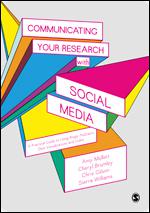
Book Review: Communicating Your Research With Social Media: A Practical Guide to Using Blogs, Podcasts, Data Visualisations and Video

Image of Andy Tattersall
Andy Tattersall
With Communicating Your Research with Social Media: A Practical Guide to Using Blogs, Podcasts, Data Visualisations and Video, authors Amy Mollett, Cheryl Brumley, Chris Gilson and Sierra Williams offer a definitive guide to communicating research using different social media tools. Reflecting on the utility of social media to all facets of the research landscape and lifecycle, this is a valuable book that will encourage readers to find the right platform for their voice, writes Andy Tattersall. 
If anyone was going to write a definitive book about communicating research using social media, it would be some of the people behind the various engaging blogs hosted by the London School of Economics and Political Science. The four authors either work or have worked for the LSE, and anyone who has ever followed the LSE Impact of Social Sciences blog will know that it has been at the forefront of social media and science communication for some time.
Social media, like most of the web, is a cross between a goldfield and a minefield. There are opportunities aplenty for those who engage with it, but also many potential problems lurking below the surface. For most academics, it still appears an unknown land when they come at it from a wholly professional perspective. There are those who know what they are doing, and often doing it well; there are those who are not engaging with social media at all; and there are those who are but just aren’t sure why. All three groups can benefit from a book like Communicating Your Research with Social Media: A Practical Guide to Using Blogs, Podcasts, Data Visualisations and Video, as no matter what you think you know about social media as part of your research communication, it probably isn’t enough.
This is because social media is in a constant state of flux, always changing and always spiralling off into new areas. Like the gold- and minefield analogy, many of these require some degree of support to help navigate them successfully. Whether you are new to Twitter or mastering video, podcasts and blogging as part of your research communication lifecycle, you still have things to learn. This title begins quite rightly at the theoretical and historical end of social media, which it covers in adequate depth. As with learning to drive, there is the practical and there is the theoretical: the latter in this case helps put some flesh on the bones as to why the web is how it is and what that means to anyone working in academia. The authors do this really well as they start out by defining social media from its early beginnings right up to recent times and how it has impacted for change on a global scale, such as through the Arab Spring and the Black Lives Matter campaign.
Contrary to many people’s beliefs about social media in an academic setting, it is not just about learning to use a new technology: it is not like unpacking your new kettle, looking for the ‘on’ switch and making your first cup of tea. It requires a reason to use that technology and considerations around that choice, which this book explains throughout. You can be told to use Twitter as it will help share your research, but you need to understand what the benefits will be as well as the potential barriers and costs. Thankfully, this book highlights those considerations through each practical chapter.
Image Credit: (Mike Mackenzie CC BY 2.0 vpnsrus.com)
Quite importantly, the research lifecycle and social media are also given their own chapter as both are not mentioned in close proximity to each other nearly enough. Yet, to myself and the authors, these two spheres seem to have been destined to be together for quite some time now. For those familiar with the research lifecycle as it exists, in Chapter Two the authors present their own iteration broken into six areas: Inspiration, Collaboration, Primary Research, Dissemination, Engagement and Impact. Social media is linked to all six, and the book addresses those connections to reflect on what the research landscape looks like for those who have embraced these digital opportunities.
The next four chapters are well-signposted and cover the main areas of interest: writing blog posts; creating infographics and visualisations; making audio and podcasts; and creating videos and images for social media. Each sets out to define these areas as there are plenty of academics still unsure what each element is and how it applies to their world. So the book’s approach is to work from the basics upwards and give clear signposting along the way.
The blog chapter tackles that most fundamental of problems: ‘what to write about?’ Advice on this and how to structure your blog (with the temptation being to just write a shorter version of your research paper) are plenty as well as on applying the right tone. Careful consideration is also given as to what platforms to go to when first starting your blog. The tone is light and positive so that anyone coming in from a basic level entrypoint will not feel overwhelmed by the content. The chapters regularly pause to ask questions to guide the reader towards understanding the reason for applying any of these digital approaches to their research communication, whilst also containing no shortage of textual and visual examples of cases studies to inspire the reader to consider as part of their own application.
The chapters also make clear connections between what a tool is and how it can be applied in research communication: an area many academics fail to link. For those looking to overhaul their research practices, keen to communicate their findings and ideas and to future proof their work, the book is a good place to start. Useful waypoints are added throughout the book so you can assess your progress before launching any new social content. The temptation when given new creative tools is to rush and get content out there for your peers and the world to see. Yet if the data is distorted, unreadable or not properly labelled and branded, you could be left with problems. Thankfully, the book sets out key checkpoints throughout to negate that, a good example being the infographics and data visualisation checklist which asks seven important questions before publishing your poster and data. The book also comes with a useful companion website that includes blog posts on everything from social media and the research lifecycle to guides on using Twitter and making podcasts.
Communicating your Research with Social Media does not require the reader to start at page one and work through it in a linear fashion. As with many books, it can be digested in one large sitting or bit-by-bit as and when needed. How you engage with this book will also depend on your level of ability to use social media professionally: it is important to note a difference here between this and how you use it on a personal level. The book is aimed at a very wide market: from students to established academics, from professional support staff to journal publishers and funding bodies, all will have useful things to take away from the text.
As with other work written by the authors about social media in research, this book is another valuable addition to the collection. Of course, with everything social media these days, there is no getting away from Donald Trump, who is mentioned six times. But his appearance is a reminder that in these uncertain times, with the suppression of experts and research evidence, it has never been a more crucial period for academics to learn new digital skills. The authors conclude that the research lifecycle has in many ways always been a social process, so it should make good sense to employ new digital technologies of communication to aid that. By communicating your research, not only can academics build networks and possibilities for collaboration, gather evidence of impact and share their research, but they can be a voice of truth in a world of fake news. To do this they must first find a platform for their voice, and this book will set them off on the right path or move them further along it.
Originally published on the LSE Review of Books

Wednesday, 29 March 2017

Following the success of the learning technologist, is it time for a research equivalent?

Image of Andy Tattersall
Andy Tattersall
With so many scholarly communications tools and technologies now available, how do academics decide which are most appropriate for their research? Andy Tattersall suggests it might be time for a research equivalent of the learning technologist, a role that has helped drive innovations in teaching underpinned by technologies. The research technologist would be embedded within the university department, make recommendations on appropriate online tools, provide technical assistance and also offer guidance on accompanying issues of ethics or compliance. With the right ongoing support, academics can improve the communication, dissemination and impact of their research.
The research cycle is changing rapidly and a lot of that change is due to the proliferation of technologies and websites that support the research process. Many of the most useful tools have been captured by Jerome Bosman and Bianca Kramer in their excellent 101 Innovations in Scholarly Communications. Whilst this work is a great help to those aware of it, the reality is a majority of academics are either unaware of or unwilling to engage with the myriad tools and technologies at their disposal (beyond social networking sites such as Twitter, Facebook, ResearchGate, etc.). There are several reasons for this: workload and deadline pressures; fear of technology; ethical implications around their use and their application, especially when it comes to third party software; or too much choice.
The usefulness of these tools has been recognised by major publishers, who have made certain strategic investments in order to create their own research cycle workflows. So if the likes of Elsevier are looking to use these tools to change the research ecosystem, this should be of great interest to anyone who publishes with them, right? But with so many tools available, how do academics navigate their way through them? How do they make the connection between technology and useful application? And who helps them charter these scary, unpredictable waters?
Image credit: A Multitasking Busy Guy by uberof202 ff. This work is licensed under a CC BY-SA 2.0 license.
Lecturers and teachers have their pedagogy, what do researchers have?
If we look at applications of technology and social media in teaching, we can see more clearly how things have been implemented. Post-2004 and the advent of Web 2.0 there was an increased uptake of technology in the teaching community. The advent of virtual learning environments aided this, with the ability to employ discussion forums, blogs, video and, more recently, social media. Of course research has also taken advantage of these tools but the difference with teaching is that it was often led and facilitated by the learning technologist. This group of centralised, university-educated professionals help drive teaching innovations that are underpinned by technology – the clue is in their job title. The technology itself does not drive the teaching innovation but can help initiate and improve on it. By championing technologies with teaching staff, technologists have helped refresh higher education, making it more fit for the 21st century. They have helped shape learning and teaching through approaches such as blended and flipped classes, video and screen capture, fresh forms of assessment, use of mobiles, and social media. In many cases the innovation is led by the lecturer but, like research, in most cases it requires a good degree of guidance to get them there.
The research technologist
Whether we call it a research technologist or digital academic specialist, this role would not be too different from its learning technologist counterpart. It would support research and its dissemination in the use of video, animation, infographics, social media, online discussion, mobile device use, and social networks, to name just a few technologies. The learning technologist applies pedagogical reasoning for their technology choices, and the research equivalent would need to assess the same considerations. Not only that but good communication skills, information literacy, and an understanding of data protection, ethics, and what constitutes a good technology – and how it can be applied to a specific research setting in a sustainable and timely manner – are all essential. For example, the use of video to disseminate research around speech therapy would potentially be more useful than an infographic. In the same way, an infographic published in a blog post might be a better way of conveying the results of a public health project.
The reason why in-house support could benefit the practice and dissemination of research is that researchers are very pressured for time, and often don’t know what they need regarding research technologies and especially dissemination. Secondly, when they do know what they want, they often need it “as soon as possible”. These two problems are more solvable within the department, especially as researchers often don’t know where to go for specific help. The research technologist would be a designated, focused role, embedded within the department. They’d be a signpost to new ways of working, problem solving and, most importantly, be able to consider all issues of ethics and/or compliance when passing on advice. They’d become the “go-to” person for anyone wanting to use technology as part of their research.
More than just using technology
The issue of employing more technology in your research comes with various challenges. For example, with research that is sensitive, controversial or otherwise likely to attract negative attention, using social media does come with many issues. Instructing researchers to use Twitter to communicate their research is all well and good until they receive negative comments, especially abusive and threatening ones. Something like Twitter requires a technical explanation (e.g. how to use the block function or employ a dashboard like Tweetdeck) but also advice around negative comments, how, if and when to respond, when to block, and, in some cases, when to report to the platform, your institution or the authorities. Another example might be the copyright issues around ResearchGate or YouTube. Unless time is spent helping researchers understand how to use these tools and what the accompanying major issues are, those researchers will remain reluctant to use them at all. Additionally, the more those who use them have bad experiences, often through no fault of their own, the more likely others will see good reason to navigate around such opportunities. One bad experience on social media could put a researcher off using it for good. With the right ongoing support, these technologies can, in an impact-driven environment, help communicate and disseminate your research to wider audiences.
The role I am fortunate to have, information specialist, is akin to a learning technologist but I work more closely with researchers these days. My role was established a decade ago to look at how technologies can be leveraged to support my department. That extended to research and teaching staff, students and our own academic library. In that time I put my department on the path to their first MOOCs in 2013, edited a book on altmetrics, and championed Google Apps, as well as the use of video and social media on campus. Whilst I have seen the creation of new roles around learning technology, marketing and impact, there remain areas of support that fall between the cracks. This is where I pick up much of my work, supporting research and teaching colleagues around the use of video, infographics, social media and the many less attractive associated issues, like copyright, security, ethics, and the negative impact on productivity. I work closely with the centralised departments, which benefits all parties involved, and carry out some teaching, marking and write the occasional paper. In effect I am a hybrid model that is, hopefully, better able to understand the needs of all involved, including the centralised departments that work so hard to support researchers.
For teaching, which has always required librarians, IT technicians, and marketing experts, the learning technologist does not replace these roles, but complements them. The establishment of learning technologists within departments has helped bring teaching forward to take advantage of new technologies. For the same to happen within research it needs institutions to consider the learning technologist and explore whether there is value in developing an in-house research equivalent, a kind of “Swiss Army knife” professional, who can exploit the burgeoning number of opportunities afforded by the many new technologies out there.
Originally published in the LSE Impact Blog and republished under a Creative Commons Attribution 3.0 Unported License